
baofeng radio guide
Overview of Baofeng Radios
Baofeng radios are compact, budget‑friendly VHF/UHF handsets that opened amateur radio to millions. They offer dual‑band operation, basic FM, SSB, CW, and simple programming via software. While great for learning, their stock antenna balances range and clarity, making them ideal for beginners.!!!!!!

Common Models and Their Specs
Baofeng’s lineup centers on the UV‑5R family, the BF‑888S series, and the newer BF‑888S Pro. The UV‑5R, released in 2014, covers 136‑174 MHz (VHF) and 400‑520 MHz with a maximum 5 W output. It weighs 170 g, measures 115 × 40 × 20 mm, and uses a 1.5 V Ni‑MH pack. The UV‑5R Plus adds a 5 W output on both bands, a 2.4 GHz band, and a larger 2 Ah battery, boosting endurance to 10 h. The UV‑5R‑S, a slimmer variant, removes the UHF band for a lighter 140 g body. The BF‑888S, a 2018 revision, offers 5 W on VHF/UHF, a 2.4 GHz band, and a 2.2 Ah battery, weighing 200 g. The BF‑888S Plus adds a 5 W dual‑band output and a 3 Ah battery, extending runtime to 12 h. The BF‑888S Pro, released in 2022, upgrades to a 5 W dual‑band output, a 2.4 GHz band, a 3 Ah battery, and a detachable antenna mount for 2.4 GHz. All models support FM, SSB, CW, and simple programming via CHIRP. Common features include a 128‑channel memory, dual‑band display, and a 2‑tone PTT. Battery life ranges from 6 to 12 h, and the radios are compatible with 5 V USB charging. These specifications make Baofeng radios ideal for hobbyists, field training, and emergency communications.
Key dimensions: the UV‑5R measures 115 × 40 × 20 mm and weighs 170 g; the BF‑888S Pro is 120 × 45 × 22 mm and 200 g. Frequency coverage spans 136‑174 MHz VHF and 400‑520 MHz UHF, with optional 2.4 GHz. Dual‑band output is 5 W, battery life 6‑12 h, and USB 5 V charging is supported. The radios support 128 memory channels.
Legal Considerations & Licensing
Baofeng radios operate on amateur bands; operators must hold a valid amateur radio license. In the U.S., a Technician class license suffices for VHF/UHF use. Operating without a license can lead to fines and equipment seizure. Always check local regulations before transmitting. Follow FCC rules. and!!
Basic Setup & Power‑On Procedure
Before you turn on a Baofeng, insert a fully charged Li‑ion battery and secure the battery compartment cover. Switch the radio to the power‑on position by rotating the knob to the right until the LED flashes green. The first few seconds will display the firmware version and the current band (VHF or UHF). If the display shows “No signal,” confirm the antenna is connected and the antenna cable is free of damage. Next, set the mode selector to FM for voice, or to SSB/CW for digital modes, by pressing the MODE button until the desired letter appears on the screen. Adjust the volume knob to a comfortable level; the “VOL” indicator will show the current setting. If you plan to use a repeater, press the “RPT” button to toggle repeater mode and enter the repeater’s offset frequency using the keypad. Finally, verify that the radio is tuned to a legal frequency by pressing the “FREQ” button and scrolling through the band. Once the correct frequency is displayed, press the “TX” button to transmit and the “RX” button to listen. Remember to keep the radio within the legal power limits set by your license and to avoid transmitting on emergency or restricted channels. Following these steps ensures a safe and compliant start to your ham radio experience.
Firmware updates via PC software let you load custom frequency lists. Verify firmware matches model specs before programming. Keep volume low to avoid disturbing neighbors, use S‑Tone to identify repeaters, announce call sign, keep transmissions brief for safety now,!
Frequency Bands and Channel Selection
Baofeng radios support dual VHF (136‑174 MHz) and UHF (400‑520 MHz) bands, each subdivided into 100 kHz steps. The radio’s internal memory holds 128 channels per band, which can be programmed via the keypad or a PC interface. To select a channel, press the “CH” button until the desired channel number appears, then press “TX” to transmit. For quick access, the “FREQ” button scrolls through the full band; the display shows the current frequency in MHz. The “S‑Tone” knob toggles a 100‑Hz sub‑carrier used by repeaters; setting it to the repeater’s offset frequency allows seamless simplex‑to‑repeater handoff. When operating on a repeater, the radio automatically adds the offset after transmission, so the receiver hears the correct frequency. The “TX” and “RX” indicators confirm the radio is in transmit or receive mode. Users can load pre‑defined channel lists from the PC, which include common local repeaters and public‑service frequencies, ensuring compliance with licensing. Check regs. Adjust the “VOLUME” knob to keep audio clear, and use the “BEEP” setting to confirm channel changes. Proper channel selection and band awareness are essential for reliable communication and avoiding interference with other services. Upgrading the Baofeng’s firmware can unlock extra features, but always confirm compatibility with your model and local regulations; a well‑maintained radio, proper antenna placement, and disciplined operation will maximize performance and safety for all users daily!!
Transceiver Modes: FM, SSB, CW
Baofeng radios support three primary operating modes: FM, SSB, and CW. FM is the default simplex mode, ideal for voice communications on local repeaters or direct links; it offers a 12 kHz bandwidth and a 2 kHz audio sub‑carrier. SSB (Single‑Side Band) allows longer‑range voice by narrowing the bandwidth to 2.5 kHz, but requires a separate audio source or a compatible headset; the radio’s internal oscillator can be tuned to either LSB or USB, letting operators switch sides with ease and maintain clear audio across propagation conditions! CW (Continuous Wave) mode is used for Morse code; it uses a 1.2 kHz carrier and a 50 Hz tone for keying, and the radio can be set to transmit or receive in either LSB or USB. Switching modes is done via the “MODE” button, which cycles through FM, SSB, and CW; the display shows the current mode. For SSB and CW, the “S‑Tone” knob must be set to the appropriate offset for the desired repeater. The “TX” indicator lights green for FM and blue for SSB/CW, while the “RX” light remains amber. Proper mode selection ensures compliance with local regulations and optimizes signal quality across different propagation conditions. Always verify that your antenna is compatible with the chosen mode, as some low‑gain antennas perform poorly at CW frequencies. Use the built‑in “BEEP” setting to confirm mode changes, and remember that the Baofeng’s firmware may limit the number of SSB channels; updating firmware can unlock additional features, but only if the device is fully supported by the manufacturer. Proper mode management is essential for effective communication, especially in emergency or field operations where clarity and reliability are paramount.!!
Programming Baofeng via Software

Programming a Baofeng radio with software is the most efficient way to configure its memory. The industry standard is CHIRP, an open‑source program that supports UV‑5R, UV‑5X, and newer models. After installing CHIRP and the USB drivers, connect the radio via a USB cable; the device will appear as a mass‑storage drive. Open CHIRP, select “Radio” → “Read from Radio” to import the existing channel list. The interface displays each channel’s transmit frequency, receive frequency, offset, tone, and power setting. You can edit these fields, add new channels, or delete unused ones. When editing a channel, you can set the transmit frequency to the desired band, specify the offset if using a repeater, and choose the tone (CTCSS or DCS) for privacy. The power setting can be toggled between 5 W and 25 W, but remember that higher power may require a license. CHIRP also offers a “Backup” function that saves the channel list to a text file, allowing you to restore the original configuration if needed. After edits, click “Radio” → “Write to Radio” to upload the new configuration. The radio reboots and updated settings become active immediately. Always verify the channel list after writing; a scan of the radio’s display will confirm the frequencies and settings. This method eliminates the need for manual keypad entry, reduces errors, and enables rapid deployment quickly of channel banks, which is especially useful for field operations or emergency communications. Sharing channel lists online saves time for newcomers operations smooth! !!
Using External Antennas for Better Range
External antennas can dramatically improve a Baofeng’s reach. The stock whip offers modest gain, but swapping to a higher‑gain dipole or a loop can boost signal strength by 3–6 dB. For VHF, a 1/4‑wave dipole (≈2 m) mounted on a mast or tripod provides clear line‑of‑sight and reduced multipath. UHF users often prefer a 1/2‑wave dipole (≈1 m) or a 2‑element Yagi for focused gain, especially in urban or mountainous terrain. Antenna connectors must match the radio’s SMA port; a simple SMA‑to‑BNC adapter allows quick installation of many commercial antennas. When using an external feedline, keep cable length short (≤3 m) to avoid loss; low‑loss RG‑174 or RG‑58 coax is ideal. Grounding the antenna mast or tripod with a copper stake improves low‑frequency performance. For portable operations, a collapsible whip or a lightweight dipole kit can be carried in a backpack, then deployed on a pole. Always check the antenna’s frequency range to ensure it covers the desired band (VHF 136–174 MHz or UHF 400–520 MHz). Proper alignment and height above obstacles are key: a 3 m mast can extend line‑of‑sight by several kilometers. Finally, test the antenna by scanning a known repeater or a distant station; a noticeable increase in received signal strength confirms a successful upgrade. By choosing an antenna that fits the band and mounting it high, operators can extend a handheld’s reach from a few hundred meters to several kilometers, especially when paired with proper grounding and short, low‑loss feedlines for optimal performance.
Building a DIY Low‑Cost Antenna
Building a low‑cost antenna for a Baofeng is surprisingly straightforward and can be done with common materials. The most popular design is a 1/4‑wave dipole that fits the VHF band (136–174 MHz). To construct it, cut two equal lengths of insulated copper wire—about 2 m each for VHF or 1 m for UHF. Strip the insulation from the ends, twist each pair together, and attach them to a sturdy 1‑inch PVC pipe using a small metal clamp. The pipe serves as a mast; mount it on a tripod or a 3‑foot pole for better line‑of‑sight. Connect the dipole to the Baofeng’s SMA port using an SMA‑to‑BNC adapter and a short RG‑174 coaxial cable. Ground the antenna by driving a copper stake into the ground near the mast and connecting it to the antenna’s common point. For a quick upgrade, a simple loop antenna can be made from a 12‑inch piece of copper wire wound into a circle, then attached to the radio with a small ferrite core. Test the antenna by scanning a known repeater; a noticeable gain of 3–5 dB over the stock whip confirms success. Remember to keep the feedline short and free of bends to minimize loss, and always verify the antenna’s frequency range before use.
By experimenting with antenna length and mounting height, operators can fine‑tune reception and transmission for specific environments—urban, rural, or mountainous. A simple 1‑inch copper loop or a 3‑meter dipole offers broad coverage. Always verify the antenna’s impedance match to the radio’s 50‑ohm system; using an inline balun or a 1:1 transformer can reduce mismatch loss.
Simplex vs Repeater Operation
Simplex operation uses the same frequency for transmitting and receiving, making it ideal for short‑range contact. The Baofeng’s built‑in FM and SSB modes allow with another handheld or a nearby repeater. In simplex mode, the user must manually set the channel and power level; the radio will transmit on the selected frequency and listen on the same one, so both parties must be tuned identically.
Repeater operation extends range by using a dedicated input frequency (UHF or VHF) and an output frequency offset. The Baofeng can be configured for repeater use by setting the input and output channels, selecting the correct offset (typically +600 kHz for VHF or +5 MHz for UHF), and enabling the “TX‑RX” switch. When the user presses the transmit key, the radio automatically shifts to the output frequency, while the receiver stays on the input. This allows a single handheld to communicate with a distant repeater without the need for a separate transceiver.
Key differences include power requirements, antenna placement, and legal restrictions. Simplex is limited by the radio’s 5 W output and line‑of‑sight, whereas repeater use can reach tens of miles if the repeater’s antenna is high. Repeaters also require a clear channel and often a license to operate. The Baofeng’s firmware supports both modes, but users must be careful to avoid interference by respecting local frequency allocations and ensuring proper antenna tuning for the chosen band. Practice operation respect regulations! Stay within range.!!
Digital Modes Supported by Baofeng
Baofeng handsets are primarily analog transceivers, yet the amateur community has devised several workarounds to enable digital communication. The most common approach is to pair the radio with an external digital modem or a software‑defined radio (SDR) interface that handles the modulation and demodulation. For example, a cheap USB DMR or C4FM dongle can be connected to the Baofeng’s audio jack, allowing the device to transmit and receive digital signals while the radio itself remains in analog mode. Another popular method involves using a separate digital transceiver (such as a Yaesu FT‑DX or a Kenwood TS‑2000) and routing the audio through the Baofeng’s microphone input, effectively turning the handheld into a “digital bridge.” Some enthusiasts have even flashed custom firmware that adds limited digital support, but this is rare and often voids warranties. In practice, the Baofeng’s role in digital operation is largely as an audio gateway: it provides the user interface, power, and antenna connectivity, while the actual digital processing is handled by the external hardware or software. This hybrid setup enables participation in DMR, D-Star, and other digital networks without the need for a full‑featured digital radio, keeping costs low while expanding operational possibilities. When setting up hybrid links, users must monitor audio levels carefully, keeping the Baofeng’s microphone input at a moderate level to avoid clipping, matching the external modem’s gain to radio’s output for signal transfer, clean! now
Security Features & Encryption Options
Baofeng radios lack built‑in cryptographic hardware; they do not support official digital encryption like D‑Star or DMR secure modes. However, operators often use external solutions to add privacy. One common method is to employ a low‑cost USB modem that implements the “C4FM” or “D‑Star” protocol with optional encryption, then route the audio through the radio’s mic input. The radio itself only transmits analog audio, so the encryption is handled entirely by the external device. Another approach uses a software‑defined radio (SDR) that receives the Baofeng’s audio output, encrypts it with a shared key, and transmits the result via a separate digital link. Some hobbyists flash custom firmware that adds a simple “scrambler” to the audio path; this is not true encryption but can deter casual eavesdroppers. For truly secure communication, operators typically pair the Baofeng with a dedicated encrypted transceiver (e.g., a Kenwood TS‑2000 with a “K‑Encrypter” module) and use the handheld as a remote microphone. In all cases, the user must carefully manage audio levels to avoid clipping, as distortion can break encryption algorithms. Finally, operators should keep firmware and software up to date, use strong passphrases for any external encryption modules, and regularly audit their setup for compliance with local regulations. Additionally, operators can employ a low‑cost Bluetooth or Wi‑Fi link to stream the Baofeng’s audio to a smartphone or laptop, enabling control and logging while maintaining compliance with local daily regulations.
Maintenance & Troubleshooting Common Issues

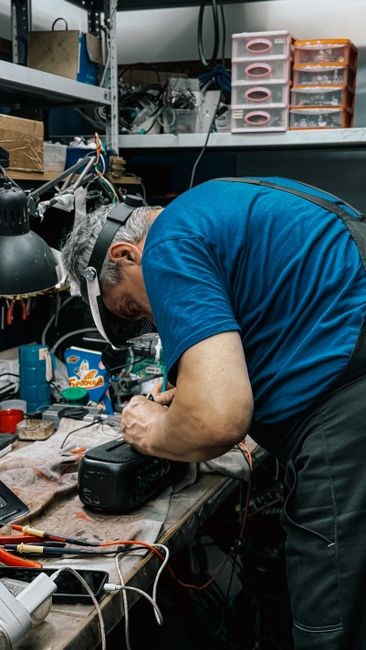
Baofeng radios are robust yet inexpensive, so routine care keeps them reliable. Start with a clean battery: remove the unit, let the Li‑Ion cell rest for 24 h, then recharge to 100 % before first use. Inspect the antenna connector for corrosion; a small amount of isopropyl alcohol and a cotton swab will restore conductivity. Check the RF port for dust; a gentle blow or soft brush cleans it without damaging the ferrite. The internal speaker and microphone should be free of debris; a quick wipe with a dry cloth prevents muffled audio. When you notice a drop in range, verify the antenna’s length and orientation; a 5‑meter wire with a 1/4‑wave matching coil often improves performance. If the radio fails to power on, try a different charger or a fresh battery; Baofeng’s power supply is sensitive to voltage spikes. If the radio’s display shows a “TX” or “RX” error, check the antenna length and ensure the ground connection is secure. For persistent “no signal” errors, reset the firmware by holding the MENU button while turning the radio on; this clears corrupted settings. A common audio glitch is “static” after a firmware update; re‑program the channel list with a fresh copy from a trusted source. If the radio locks up during operation, unplug any external antenna and power cycle the unit. Use a 3‑way switch to toggle between FM, SSB, and CW modes for troubleshooting. When the radio overheats, pause operation and let it cool before resuming to prevent internal damage. If the speaker output is low, verify the volume knob is set to maximum and that the speaker jack is seated properly. Finally, always update the firmware via the official Baofeng website; newer builds fix bugs such as “frequency drift” and “menu lag”. Regularly back up your channel list using a PC and the Baofeng’s USB port, so you can restore it quickly after a reset or hardware failure.
- Battery health: measure voltage with a multimeter; < 3.3 V indicates replacement.
- Firmware integrity: compare CRC with official build.
- Antenna impedance: use a 50 Ω tuner if available.
- Channel list consistency: ensure no duplicate frequencies.
- Keypad responsiveness: press each key; if lag, clean contacts.
If you encounter a “battery drain” issue, check for firmware updates that optimize power consumption. If the battery shows a rapid voltage drop, replace the cell before further use. For extreme environments, store the radio in a waterproof pouch and use a heat‑shrink sleeve on the antenna connector to prevent moisture ingress. Document all maintenance actions in a log; this helps diagnose recurring problems. If you notice a sudden drop in battery voltage during use, consider using a dedicated power bank to extend operation. With consistent care, a Baofeng can serve reliably for years, providing a solid foundation for amateur radio exploration.
Remember to replace the battery every 2–3 years to maintain peak performance.
Operating a Baofeng radio responsibly requires awareness of legal limits, proper antenna handling, and respectful communication etiquette. First confirm your license class and stay within the authorized frequency bands; unauthorized use can lead to fines or equipment seizure. Second maintain a clear line of sight or use repeaters when possible; this reduces the need for high power output that could interfere with other users. Third always set the power level to the minimum necessary for reliable contact—many handhelds default to 5 W, but 1 W often suffices for local simplex links. Fourth avoid transmitting on emergency channels (e.g., 121.5 MHz or 121.975 MHz) unless you are part of a coordinated response. Fifth use a proper antenna: a 5‑meter wire with a 1/4‑wave matching coil improves both range and signal quality, while a rubber duck can distort audio. Sixth keep the microphone close to your mouth use a windscreen to reduce wind noise. Seventh when using SSB or CW practice proper voice or keying techniques to prevent miscommunication. Eighth monitor your battery level; a low voltage can cause sudden shutdowns that disrupt conversations. Ninth respect privacy: do not broadcast personal data or sensitive information without consent. Tenth log your contacts in a logbook or digital log to track frequency usage and confirm compliance with regulations. By following these steps, you preserve the integrity of the amateur radio spectrum and ensure a safe, enjoyable experience for all operators. Stay alert keep contacts now short! .
Resources & Communities for Further Learning
For anyone looking to deepen their Baofeng knowledge, the internet offers a wealth of free and paid resources. The first stop is the official Baofeng website, which hosts firmware updates, user manuals, and a FAQ section that answers common questions about programming and troubleshooting. Next, the ham radio community on Reddit’s r/amateurradio is an active forum where users share tips on antenna building, software configuration, and legal compliance. A dedicated Baofeng subreddit, r/Baofeng, provides step‑by‑step tutorials, firmware hacks, and a marketplace for accessories such as upgraded antennas and battery packs. The ARRL (American Radio Relay League) website offers a comprehensive library of articles, webinars, and a directory of local clubs that often host hands‑on workshops for beginners. For those who prefer video, YouTube hosts thousands of channels—such as “Ham Radio with Hams” and “The Ham Show”—that cover everything from basic operation to advanced digital modes. The Ham Radio Digital Mode (HRDM) community on Discord is a real‑time chat hub where operators new can stay current, improve their skills, and contribute to a ham radio ecosystem. Finally, the FCC’s online database allows users to verify license status, check frequency allocations, and stay updated on regulatory changes that may affect Baofeng usage. By engaging with these platforms operators new can stay current, improve their skills, and contribute to a ham radio ecosystem. Additionally, local amateur radio clubs often provide mentorship programs, allowing novices to pair with operators.